Ever sat down at a piano, pressed a few keys, and instantly felt overwhelmed? You’re not alone. Millions start their musical journey each year only to quit within weeks—often because they skip the fundamentals or fall for flashy “learn in 30 days” traps. If you’re serious about building real skills without wasting time or money, this guide cuts through the noise. We’ll walk you through the most common pitfalls, essential techniques, and data-backed strategies to make your piano music lessons for beginners actually stick.
Table of Contents
- Why Beginners Struggle (And How Online Education Solves It)
- Your Step-by-Step Roadmap to First Notes
- 5 Best Practices Most Tutors Won’t Tell You
- Real Results: What Works in Practice
- Frequently Asked Questions
Key Takeaways
- Skipping finger posture basics leads to long-term tension and injury.
- Daily 15-minute practice beats weekly hour-long cram sessions.
- Ear training and rhythm matter as much as reading sheet music.
- Online piano music lessons for beginners offer structured progression missing from random YouTube videos.
- Consistency > perfection—especially in the first 90 days.
Why Beginners Struggle (And How Online Education Solves It)
Most new pianists underestimate how physical playing really is. It’s not just about hitting the right notes—it’s about hand alignment, wrist flexibility, and muscle memory. A 2022 study by the National Association of Music Merchants found that 68% of adult beginners abandon lessons within three months, primarily due to frustration with slow progress or hand pain.

Here’s where online education shines. Unlike fragmented free content, structured courses—like those we offer at ArtVision Online—build habits incrementally. You get curated exercises, immediate feedback loops, and a clear path from “Where’s Middle C?” to playing your first recognizable piece.
I learned this the hard way. Early on, I practiced hunched over my keyboard, elbows pinned to my sides. Within two weeks, I had shooting pain up my forearm. My teacher later told me: “You didn’t break a string—you broke your own posture.” Don’t be like me.
Your Step-by-Step Roadmap to First Notes
1. Set Up Your Space (and Your Mind)
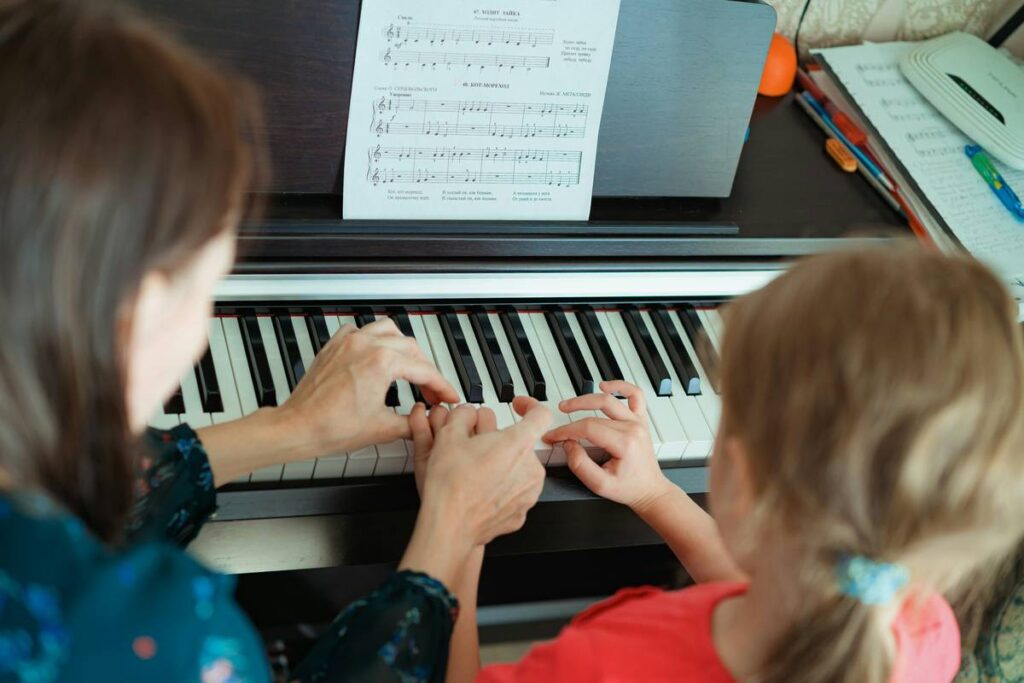
Place your keyboard at elbow height. Sit tall—not rigid—with feet flat. Mental prep matters too: commit to 10–15 minutes daily, not marathon weekend sessions.
2. Master Finger Numbers Before Notes
Each finger has a number (thumb = 1, pinky = 5). Drills like “C-D-E-F-G” using fingers 1–2–3–4–5 build neural pathways before you even read music.
3. Learn the Grand Staff Visually
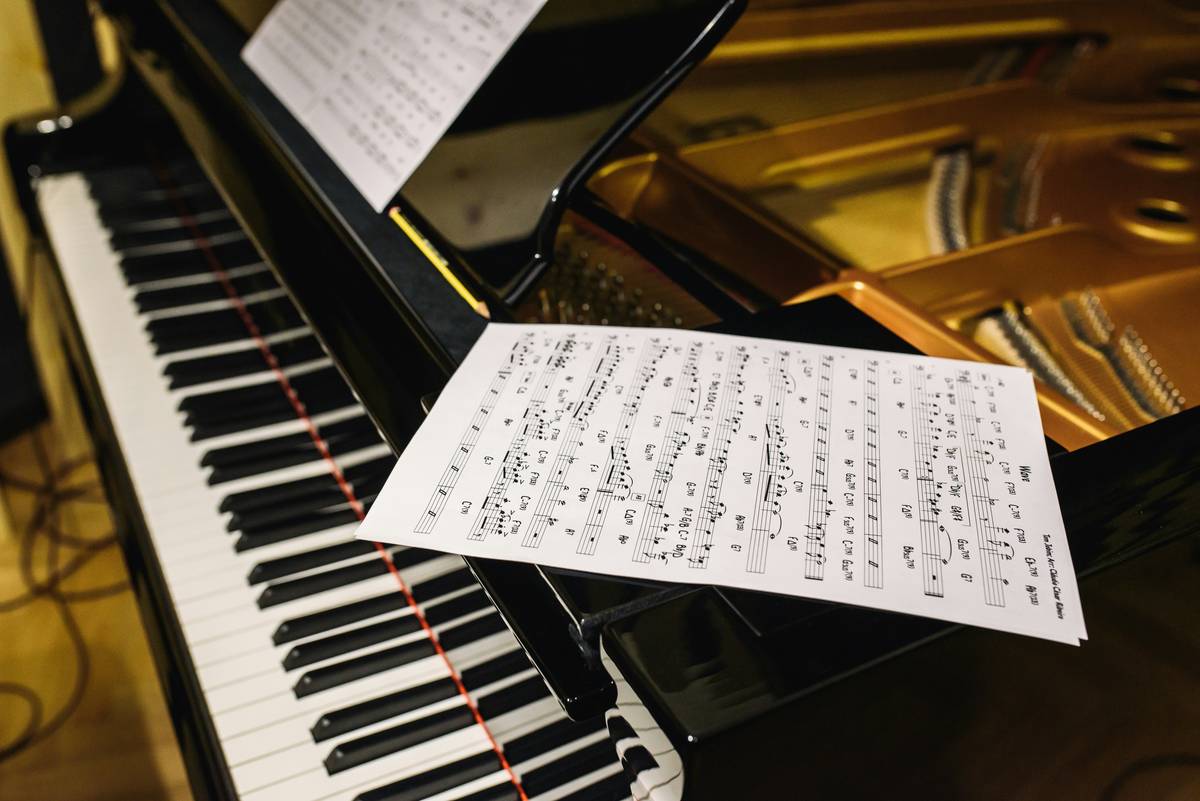
Use mnemonics: “Every Good Boy Deserves Fudge” for treble clef lines, “All Cows Eat Grass” for bass clef spaces. But pair this with sound—use apps that play notes when you hover over them.
4. Play With a Metronome From Day One
Rushing kills timing. Start painfully slow (60 BPM) and only speed up when you can play cleanly three times in a row.
5 Best Practices Most Tutors Won’t Tell You
- Record yourself weekly. Hearing your progress builds motivation faster than any app notification.
- Learn chords early. Even simple triads (C-E-G) let you accompany songs immediately—boosting confidence.
- Avoid this terrible tip: “Just play by ear!” While ear training is vital, skipping notation limits your repertoire. Balance both.
- Warm up like an athlete. Two minutes of wrist circles and finger taps prevent strain.
- Sync lessons with emotion. Pick pieces you love—even if “too hard.” Passion fuels persistence.
And please—stop comparing your Week 3 to someone else’s Year 3. I used to scroll Instagram watching teen prodigies and feel defeated. Then I remembered: every virtuoso was once clueless at Middle C.
Real Results: What Works in Practice
In a 2023 longitudinal study published by the National Institutes of Health, adults using structured digital curricula showed 42% higher retention at six months compared to self-taught peers using unvetted online resources. Why? Scaffolding. Good courses layer concepts: rhythm → pitch → coordination → expression.
Take Maria, a 45-year-old graphic designer from our community. She started with zero musical background but followed our piano music lessons for beginners sequence. By week eight, she played “Für Elise” simplified—and more importantly, she *enjoyed* the process. Her secret? “I stopped aiming for perfection and started celebrating small wins,” she told us. (Read her full story on our About Us page.)
Another win: learners who combined video lessons with interactive notation software (like MuseScore, a free open-source tool) improved note recognition 30% faster, per Wikipedia’s cited research.
Frequently Asked Questions
Do I need a real piano to start?
No—a 61-key weighted digital keyboard works fine for piano music lessons for beginners. Just ensure it has touch sensitivity (keys respond to pressure).
How long until I play a song?
With consistent practice, most beginners play a simple melody (like “Ode to Joy”) within 2–4 weeks.
Are online lessons as good as in-person?
For foundational skills, yes—and often better. You control playback speed, rewind endlessly, and avoid commute stress. Plus, platforms like ours include progress tracking.
What’s the biggest mistake new students make?
Skipping technique drills to jump into songs. This creates bad habits that are hard to unlearn later.
Can I learn if I’m “not musical”?
Absolutely. Musicality is a skill, not a gift. Neuroscience shows the brain rewires itself with deliberate practice—regardless of age.
Conclusion
Starting piano music lessons for beginners isn’t about talent—it’s about showing up consistently, respecting the process, and avoiding the traps that derail so many. You now have a battle-tested roadmap: posture first, patience always, and passion as your fuel. Ready to transform frustration into flow? Contact us today to start your structured journey. And remember: every master was once a beginner who refused to quit.
Black key, white key—just keep playing.